
The Modern Golfer: Fitness, Strength and Raising Your Game
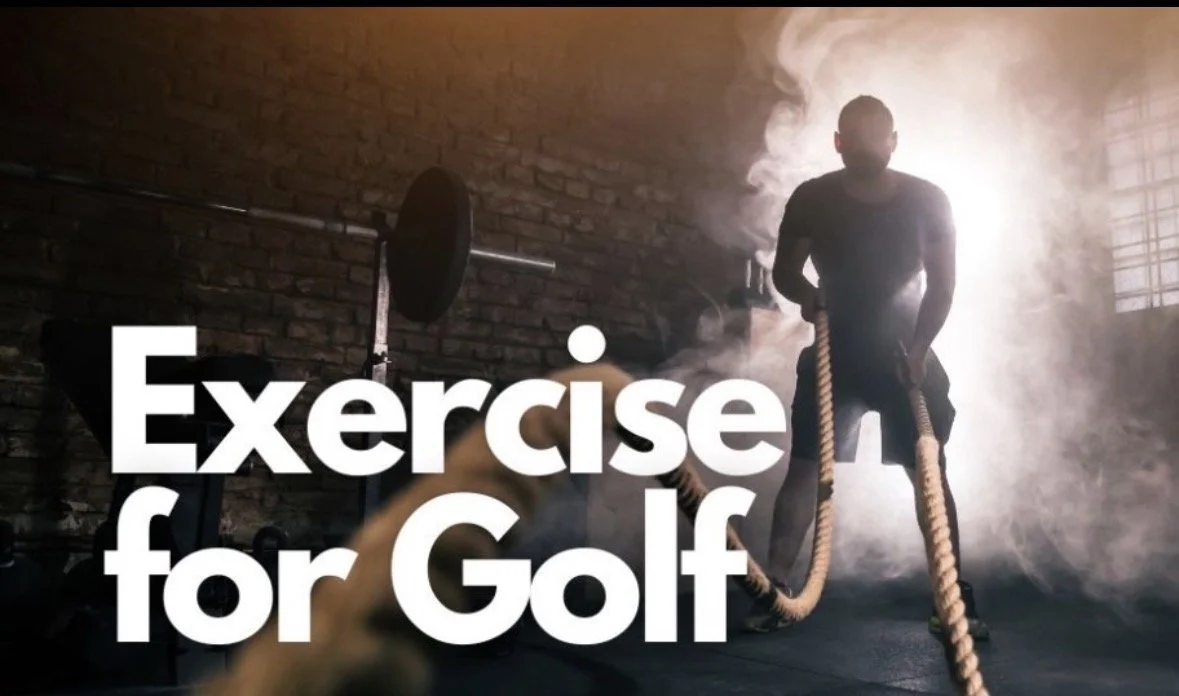
For many years, golf carried the reputation of being a sport where fitness didn’t really matter. Players focused on technique, feel and repetition. Time spent in the gym was often considered unnecessary, and some even believed that lifting weights might damage a golfer’s swing.
But the modern game has evolved.
Today there is a growing understanding that physical preparation can influence performance. Fitness can affect endurance, stability and even how consistently a player performs across an entire round. Yet the conversation around fitness in golf is more complex than simply becoming stronger.
It raises an interesting question: does strength actually make golfers better, or are we misunderstanding the real benefits of physical fitness in the game?
Golf Is More Physically Demanding Than It Appears
The physical demands of the game are often underestimated.
A typical 18-hole round can involve walking six to ten miles, spending four to five hours on your feet and repeatedly performing a powerful rotational movement through the spine, hips and shoulders, whilst every shot requires concentration, decision-making and emotional control.
Fatigue often becomes a factor late in the round. As energy levels drop, swing mechanics can become less stable and focus can begin to fade.
Players who maintain their energy and concentration throughout the round often gain a subtle but important advantage.
Golf may not involve sprinting or physical contact, but it still requires endurance, balance and coordination.
The Moment Golf Began to Think Like a Sport
A major shift in golf’s approach to physical preparation came with Tiger Woods.
When Woods emerged in the late 1990s, he brought a level of athletic preparation rarely seen in golf before. Strength training, flexibility work and endurance training were all part of his routine. His physical conditioning produced remarkable power and consistency.
Athletic preparation = performance.
Tiger changed perceptions with professional golfers working with trainers, physiotherapists and sports scientists.
Fitness became part of the performance equation.
The Argument for Strength
There is a reason why stronger and more physically developed players often perform well in modern golf.
Greater strength can contribute to higher clubhead speed, leading to increased distance. Distance in golf can provide a competitive advantage, particularly on longer courses where shorter approach shots make scoring opportunities easier.
Strength can also improve stability during the swing and help golfers maintain control under pressure.
This helps explain why many of today’s professional golfers appear more athletic than players from previous generations. Larger, stronger athletes are often able to generate more power while maintaining balance through the swing.
Strength this plays a role in competitive success.
But Why is Strength Alone Is Not Enough?
The golf swing is not simply a display of force. It is a coordinated sequence of movements that relies heavily on timing, mobility and balance.
For many golfers, the limiting factors are not strength but:
Mobility through the hips and spine
Efficient movement patterns
Balance and stability
Consistency of strike
If strength training increases muscle mass but reduces mobility or disrupts movement patterns, it can actually make the swing less efficient.
This is why modern golf conditioning focuses less on raw strength and more on how the body moves.
What About Explosive Power Training?
Plyometric training, which focuses on explosive movements such as jumps and throws, has also become popular in golf fitness programmes.
In theory, these exercises help increase clubhead speed by improving the body’s ability to generate force quickly.
But for many amateur golfers, power is not the primary limitation but would gain far more by improving mobility, balance and swing efficiency.
Explosive training may benefit elite athletes with efficient swing mechanics, but it is not always essential for everyday golfers.
The Physical Qualities That Truly Help Golfers
When we look at the golfers who perform consistently well, the most important physical qualities tend to be more balanced.
Mobility allows the body to rotate freely and create a smooth, natural swing.
Stability provides a reliable base for consistent ball striking.
Endurance helps golfers maintain concentration and physical control over several hours of play.
Durability reduces the risk of injury and allows players to practise and compete more regularly.
These qualities help golfers repeat their swing effectively and maintain performance throughout a round.
Fitness, Mindset and the Greatmaker Approach
At Greatmaker, performance in golf is viewed as something that extends beyond the swing itself.
The modern golfer is evolving. Improvement increasingly comes from developing the whole player, physically, mentally and emotionally.
Fitness is part of that preparation.
However, staying composed when the round becomes difficult and maintaining belief after mistakes all require resilience.
That combination of preparation and mindset reflects the deeper philosophy behind the game.
Raising Your Game
Golf will always be a sport built on skill, patience and experience.
But as the game continues to evolve, physical preparation is becoming part of how golfers approach improvement.
The goal is not simply to become stronger.
It is to become the most prepared version of yourself capable of walking further, concentrating longer and performing when the round becomes challenging.
Golf is not just about hitting better shots, it is about continually finding ways to Raise your Game !