
The Masters, Pressure, and the Reality of Performance
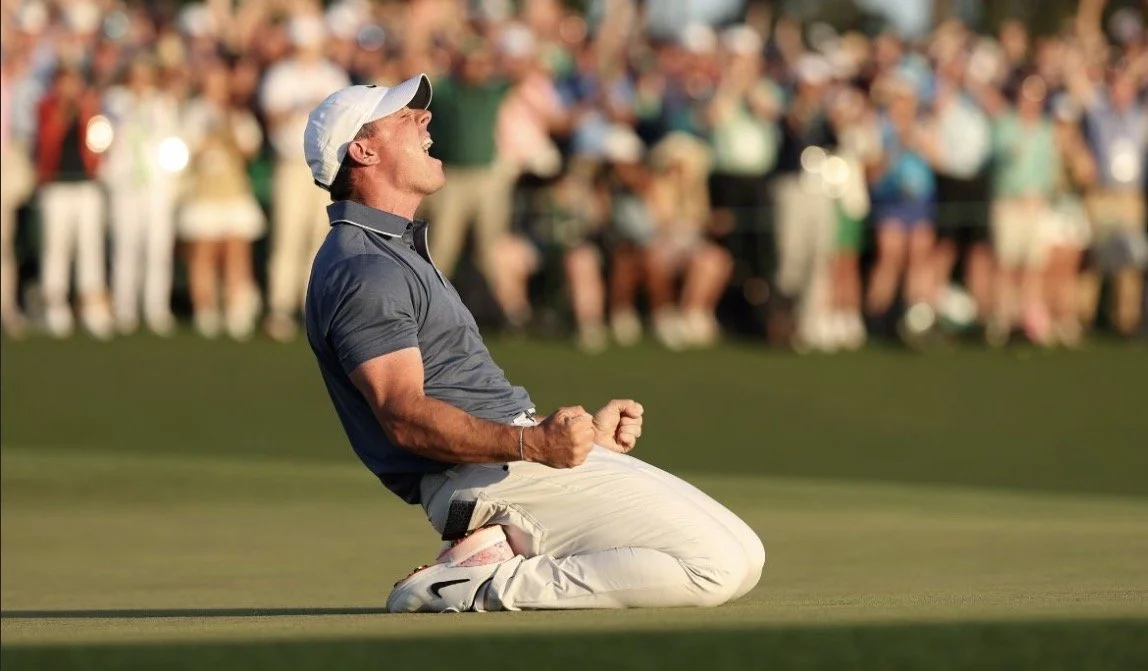
On paper, The Masters is not the most brutal major. It does not have the suffocating rough of the U.S. Open, or the unpredictable weather of links golf or the sheer depth of the PGA Championship field.
Yet it consistently produces some of the most psychologically demanding moments in sport.
Why?
Because everything is known.
Players know:
Every contour of every green
Every pin position they’re likely to face
Every historical collapse that has happened before them
There are no surprises.
Only execution.
The weight of expectation
Most sporting pressure is reactive.
Something goes wrong.
Conditions change.
You adjust.
The Masters is different.
It creates anticipated pressure.
Players arrive not asking what might happen, but when it will happen.
The tee shot at 12
The approach into 15
The putt on 18
They’ve seen it all before on television, in highlights, in history.
That creates a unique mental load:
You are not reacting to pressure.
You are walking towards it.
And that distinction is everything.
Precision under certainty
At Augusta, success is not about survival.
It is about precision under expectation.
You are expected to:
Hit exact numbers
Control spin into tight slopes
Commit fully to shots you know carry risk
There is no hiding.
No randomness to blame.
Only your ability to execute under complete awareness.
Why this is the purest test of mental resilience
Mental resilience is often misunderstood.
It is not simply “grinding it out” when things go wrong.
True resilience is:
Holding clarity when outcomes are known
Trusting your process when doubt is justified
Executing despite memory, history, and consequence
At The Masters, they know exactly what is required.
And still, most fail.
The illusion of difficulty
Golf often celebrates difficulty.
But difficulty can hide flaws.
Bad weather creates excuses
Extreme conditions level the field
Chaos introduces luck
Certainty removes all of that.
At Augusta:
You cannot blame the course
You cannot blame the conditions
You cannot blame randomness
You are left with one thing:
Your ability to perform when nothing is uncertain except the outcome.
The psychology of collapse
Some of the most famous moments in golf have come at The Masters.
Not because the shots were impossible.
But because the players knew what was at stake.
And that knowledge changes behaviour.
Decision-making tightens
Tempo shifts
Commitment fades
This is where performance separates.
Not in the swing.
In the mind.
What this means for modern golfers
If you want to improve your game, you need more certainty.
Instead of:
Blaming conditions
Changing swing thoughts
Searching for new fixes
You should be training:
Repetition under expectation
Decision-making under pressure
Commitment when doubt is present
Because that is the real game.
The Greatmaker mindset
Performance is not built in perfect moments.
It is built in pressure you cannot avoid.
That is why the most important shift for any golfer is this:
Stop fearing expectation.
Start training for it.
The Masters teaches us that greatness is not about overcoming the unknown.
It is about executing when everything is known and still delivering.
Final thought
The Masters is not defined by how hard it is but how clear it is.
Every player knows what’s coming and understands the stakes.
But only a few can step forward to execute it.
That is not just golf.
That is performance.